If you only heard the accusation, you would think God built a torture house and then hunted men into it. That picture does not survive contact with His words.
He is not willing that any should perish. He will have all men to be saved. He has no pleasure in the death of the wicked. The Son was not sent to condemn the world, but that the world through Him might be saved.
Hell is real. It is conscious. It does not burn out. And still, the whole weight of Heaven is aimed at keeping a man out of it.
God's words first. Then the objections.People soften this by calling Hell "separation from God" and then treat that like an empty room. Separation from God is not nothing. God is light, life, peace, rest, comfort, mercy, and living water. Take those away, and you are not left with a quiet void. You are left with their opposites.
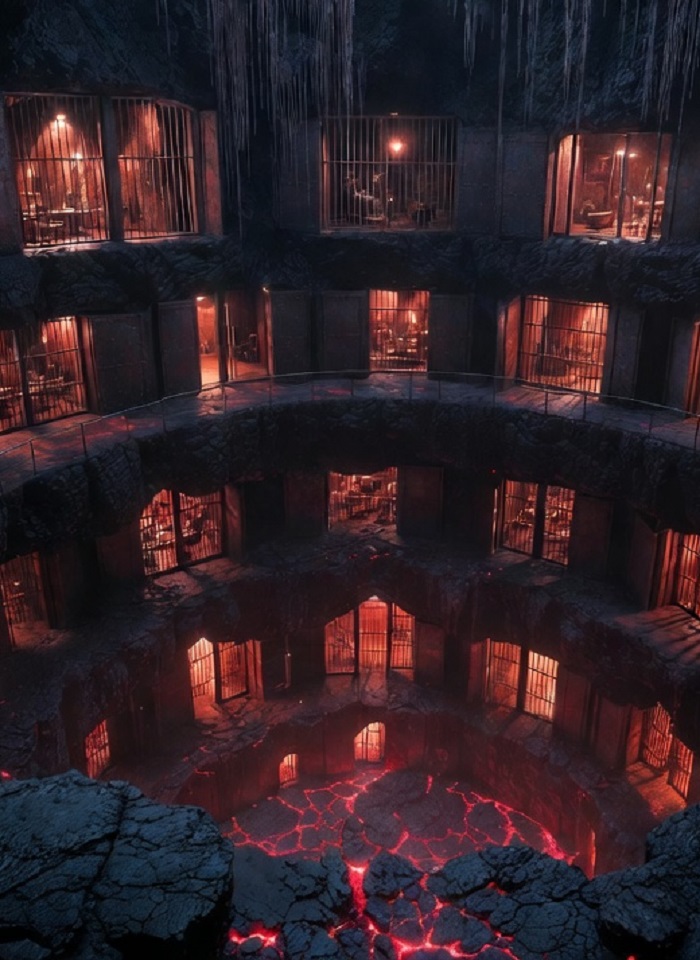
Hell is outer darkness. Not dim lighting. Darkness so complete that men wail in it.
Hell is the second death. Death in God's words is not "switched off." It is ruin that still feels.
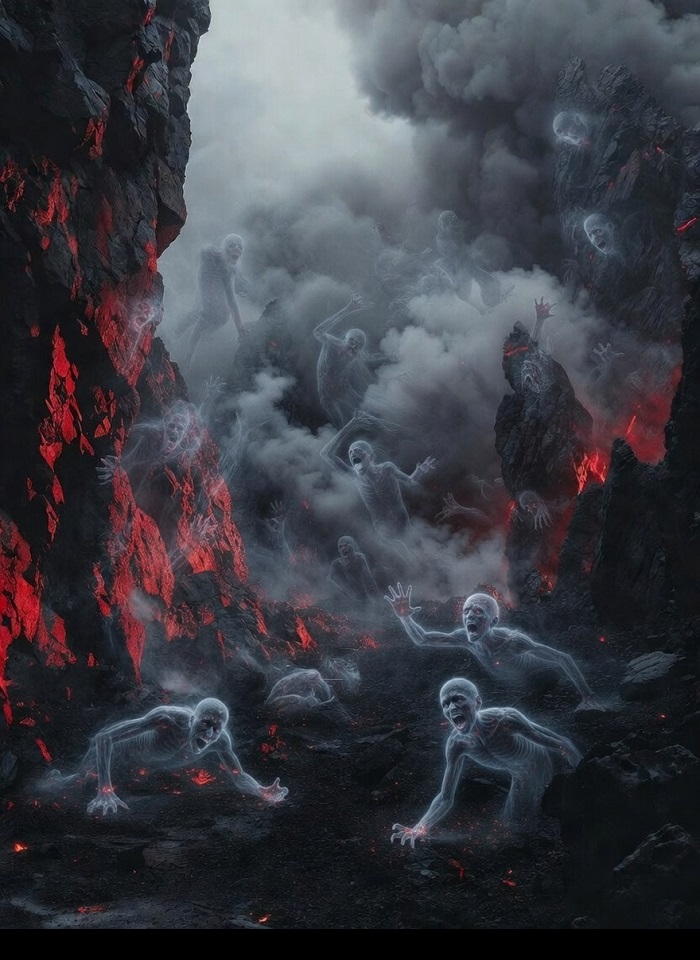
In that fire they have no rest day nor night. The smoke of their torment goes up for ever and ever.
The rich man still thirsted. He still remembered. He still wanted one drop on his tongue.
Lazarus was comforted. The other man was tormented. Same moment. Two different estates.
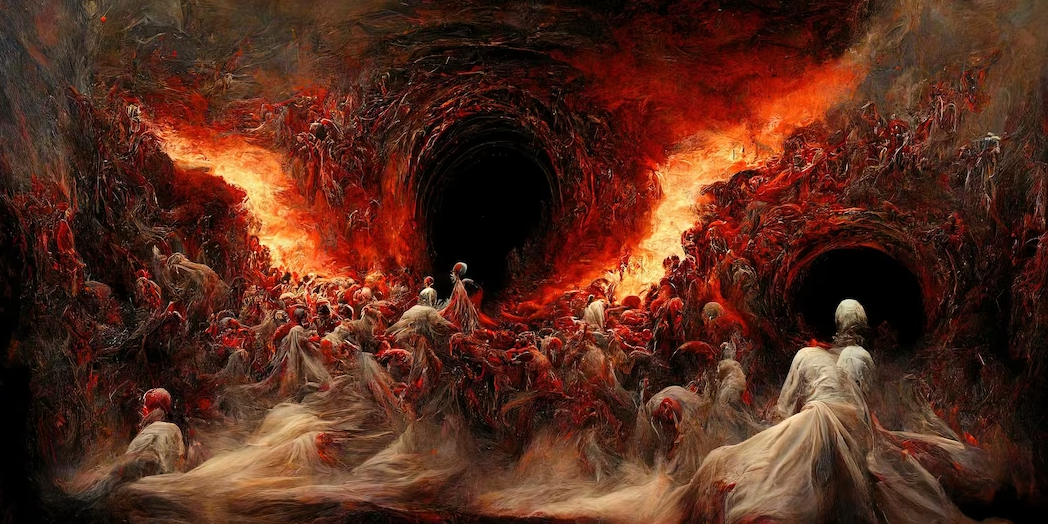
Hell has weeping and gnashing of teeth. That is not peace. That is agony with a mind still working.
The gulf is fixed. Mercy was offered on this side of death. After judgment, the refusal stands.
Everlasting destruction from the presence of the Lord is loss of His goodness, not loss of existence.
Jesus Christ spoke of Hell as a place men can enter with both soul and body. He did not treat it as a symbol for "bad feelings" or a short furnace that then goes cold. He treated it as the end of a road a man can refuse to leave.
Three times in that passage the fire is not quenched and the worm does not die. If the person is gone, there is no "their worm." The language only works if someone is still there to be spoken of as their.
Watch the pairing. Everlasting punishment sits next to life eternal. If "everlasting" on one side means it never ends, it cannot be emptied of meaning on the other side. Annihilation is not everlasting punishment. It is the end of punishment. Once a man is gone, there is nothing left to punish.
Luke 16 is not a parable about farming or coins. Names are used. Abraham is named. Lazarus is named. The rich man is conscious after death. He can see. He can speak. He can remember his brothers. He can feel thirst. He is tormented in a flame. He wants relief and cannot get it. He wants warning sent back to the living. Abraham tells him they have Moses and the prophets.
That is not a man who has been switched off. That is not a soul waiting to be deleted. That is a man who already knows what he refused, and still has a mind to know it.
The devil is cast into the lake of fire and shall be tormented day and night for ever and ever. Death and hell are cast in after him. Whosoever was not found written in the book of life is cast in as well. The second death is named, and then defined: it is the lake of fire. Scripture does not define it as "the person stops existing."
"No rest day nor night" cannot describe a pile of ash. Ash does not need rest. Ash does not watch day turn into night. Torment that has smoke rising for ever and ever is torment that continues.
Annihilationism sounds merciful to modern ears. The claim is usually this: the wicked are judged, then they cease. Sometimes it is dressed as "conditional immortality." Sometimes it hides under the word "destroy." None of that matches how God's words use those terms when the whole witness is allowed to speak.
Lost sheep are "destroyed" and still exist. Bottles perish and still lie in pieces. A ruined man is destroyed in life long before his body stops breathing. Ruin is not the same thing as deletion.
The opposite of perish in that verse is everlasting life. The warning is not "you will blink out." The warning is that you will not have life, and you will remain under condemnation already attached to unbelief.
Then "life eternal" would only mean the result of living once. Nobody reads it that way. The same sentence gives both. You do not get to keep one forever and shrink the other to a moment.
That is not a reading of the text. That is a rewrite of God until He matches us. The same God who gave His Son also told the truth about the place prepared for the devil and his angels.
Matthew 10:28 is often dragged in here: fear him which is able to destroy both soul and body in hell. The verse does not say the soul is snuffed out like a candle and that is the end of the matter. It says there is a judgment that reaches the whole man. Mark 9 already told you what that fire does. It is not quenched. Revelation already told you they have no rest. Luke 16 already showed a man in it with his memory intact.
Daniel said some shall awake to shame and everlasting contempt. Contempt that lasts still has an object. Shame that lasts still has a face.

"The Lord is not slack concerning his promise, as some men count slackness; but is longsuffering to us-ward, not willing that any should perish, but that all should come to repentance." That is 2 Peter 3:9. It does not say He is willing that most should perish so that His wrath has somewhere to land.
"For this is good and acceptable in the sight of God our Saviour; Who will have all men to be saved, and to come unto the knowledge of the truth." That is 1 Timothy 2:3-4.
"Have I any pleasure at all that the wicked should die? saith the Lord GOD: and not that he should return from his ways, and live?" That is Ezekiel 18:23. He repeats it. He has no pleasure in the death of him that dieth.
Everlasting fire was prepared for the devil and his angels. That is the Lord's own sentence. Man was made in the image of God, to walk with Him. Men arrive in that fire because they refuse the rescue and remain aligned with the one the fire was made for. That is a tragedy. It is not God inventing a human sport.
This is where the accusation usually turns ugly. The critic paints God with a whip in His hand, feeding the flame because He enjoys it. Look at how the words actually move.
John 3:18 says the unbeliever is condemned already, because he hath not believed in the name of the only begotten Son of God. The sentence is already attached to the refusal. God sent the Son so the world would not have to stay under it.
Romans 1 does not show God inventing new pains for rebels. It shows Him giving them up to what they already wanted. Three times: God gave them up. God gave them up. God gave them over. When a man keeps pushing away every attribute of God, he is not forced into a random dungeon. He is allowed to have a world without those attributes. That world has a name.
James is just as plain. Every man is tempted when he is drawn away of his own lust. Lust brings forth sin. Sin, when it is finished, brings forth death. Death is sin's child. God is not the father of that.
Hebrews 2:14 says the devil had the power of death, and that Jesus Christ took flesh so that through death He might destroy him that had the power of death. The destroyer is not the Saviour. The Saviour came to break the destroyer's hold.
Isaiah 14 shows hell from beneath moved to meet a fallen king at his coming. The place itself answers. Luke 16 shows the flame already there, the gulf already fixed, Abraham already unable to send a drop of water. Nobody in that account describes the Father as the one pouring the fire. The man is in the estate he died in.
2 Thessalonians 1:9 says they are punished with everlasting destruction from the presence of the Lord, and from the glory of his power. From His presence. That is the point. They do not get His goodness. They do get existence without it. Existence without God is not peace. It is pain, thirst, darkness, unrest, memory, and contempt. That is what "everything God is not" looks like when it is inhabited.
A monster does not bleed for the people accusing Him. God commendeth His love toward us, in that, while we were yet sinners, Christ died for us.
"And ye will not come to me, that ye might have life." The refusal is theirs. Life was offered. They would not have Him.
If the slanderer, the predator, and the saint all fade into the same nothing, justice was a speech and not a fact. God's words do not flatten the difference.
Sin is not measured only by the clock it took to commit it. It is measured by the One it is against. A man can strike another man and pay a fine. The same blow against a king is treason. God is holy. The life He offers is everlasting. The contempt of those who refuse Him is called everlasting for the same reason. And the man in Luke 16 is not asking to repent. He is asking for relief while he remains what he was.
Love that forces itself on a man is not love. "Ye will not come to me" stands. Heaven is the presence of the Lord. A man who spent his life pushing that presence away is not being kind to himself if he is dragged into it against his will. God made a way. He does not rape the will.
The gospel is ugly only if the danger was fake. If there is no Hell, the cross is theatre. If the danger is real, the cross is the most beautiful thing God ever did. He did not leave the world to find out the hard way with no warning and no substitute.
The One who made it told us. He also went into death and rose again. That is enough. What men glimpse at the edge of death only ever agrees with what He already said: consciousness continues, light and darkness are not the same place, and the soul is not a rumour.
The gospel is not a slogan and it is not a church brand. It is this: Christ died for our sins according to the scriptures, He was buried, and He rose again the third day according to the scriptures. That is who He is and what He did. Whosoever believeth that Jesus is the Christ is born of God. Whosoever shall call upon the name of the Lord shall be saved.
God sent not His Son into the world to condemn the world, but that the world through Him might be saved. He that believeth on Him is not condemned. That offer is still open on this side of the grave.