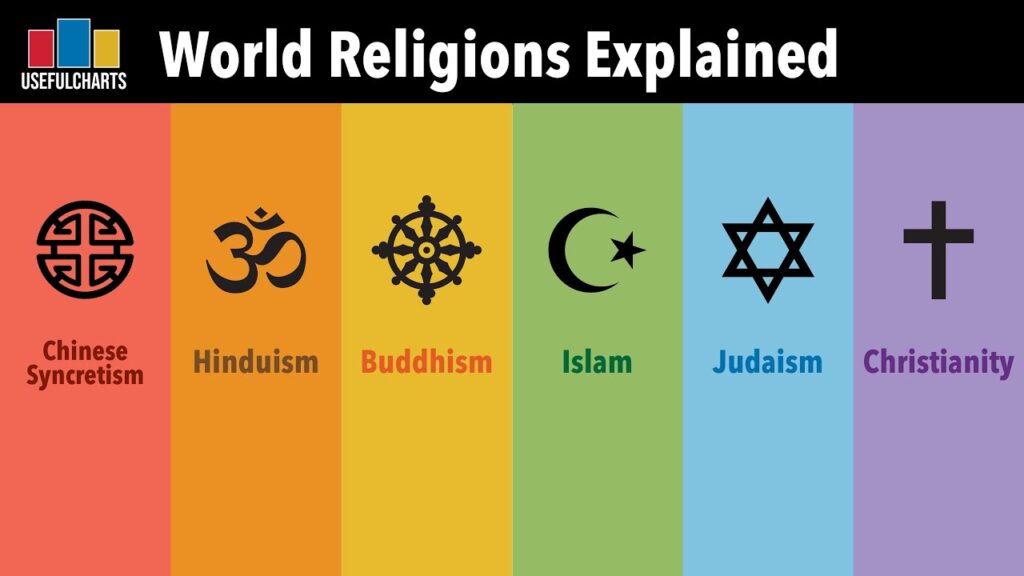
If every religion claims their God/god is absolute, perfect etc, surely they would have been provided some form of instruction for their faith?
This instruction should reflect that perfection right?
If one has a perfect 'instructional' as it were, in practice, it should work, and perhaps it will also present some information as to what all these other belief systems are...
If one desires actual truth, then I'd suggest one follows this method of discovery
Catholicism claims a unified system built on Scripture, Sacred Tradition, and the Magisterium. Yet a closer examination of its own historical texts, manuscripts, councils, and practices reveals frequent contradictions, reversals, and alterations introduced to support evolving teachings or agendas.
The Catholic Old Testament includes seven additional books (Tobit, Judith, 1-2 Maccabees, Wisdom, Sirach, Baruch) plus additions to Esther and Daniel, known as the deuterocanonicals or Apocrypha. These were not part of the Hebrew canon accepted by Judaism. Jerome, commissioned to produce the Latin Vulgate in the late 4th century, included them only under pressure from church authorities, despite his firm view that they did not belong in the canonical Scriptures and should not form the basis for doctrine. He treated them as useful for edification but not inspired. The formal inclusion as canonical came much later at the Council of Trent in the 16th century, partly in response to Reformation challenges. This late elevation highlights an internal shift in how the church defined its own sacred texts.
The Vulgate, long the official Latin Bible, contains readings that appear tailored to later Catholic emphases. In Genesis 3:15, the Hebrew reads "He will crush your head" (pointing to the Messiah), but the Vulgate shifts to "She will crush your head," aligning with Marian doctrines of Mary as co-redeemer. Similarly, Luke 1:28 changes from "highly favored one" to "full of grace," reinforcing specific views of Mary's role. The Comma Johanneum in 1 John 5:7-8, an explicit Trinitarian insertion absent from early Greek manuscripts, persisted in the Vulgate tradition. These examples show how textual choices or preservations supported developing teachings, even when questioned historically.
The Magisterium's own history shows striking changes. For over a millennium, laity received communion under both kinds (bread and wine), yet from the 12th century onward, the cup was withheld, formalized at the Council of Constance in 1415. Earlier popes like Leo I (d. 461) and Gelasius (d. 496) had condemned such restriction. The practice reversed again after Vatican II in the 1970s. Clerical celibacy, enforced universally from 1079 under Gregory VII, clashed with earlier allowances for married bishops and priests, as seen in apostolic examples like Peter. These shifts demonstrate the Magisterium adapting rules over time, sometimes contradicting prior positions.
In Catholic catechisms and teachings, the Ten Commandments omit the full second commandment prohibiting graven images (Exodus 20:4-5) and divide the tenth to preserve the count of ten. This adjustment accommodates widespread use of statues and icons, despite historical debates over their veneration. The restructuring appears designed to fit liturgical and devotional practices that evolved separately from the original text.
Practices like the Rosary (emerging around 1208 with claimed revelations) and mandatory priestly celibacy show human additions that gained authoritative status. Sprinkling baptism, accepted widely only after 1311, replaced earlier immersion norms in many cases. These developments, often justified by tradition or councils, introduce layers not present in earlier church sources and reveal ongoing adjustments within the system.
Islam presents the Qur'an as perfectly preserved, unchanged, and free from contradiction. Yet a look at its own historical records, manuscript evidence, compilation process, and supporting texts like the Hadith reveals significant internal tensions, alterations, and conflicting elements that challenge claims of flawless transmission and unity.
After Muhammad's death, variations in recitation and written copies emerged among companions and different regions. Caliph Uthman, around 650 CE, compiled a single consonantal text and sent copies to major cities while ordering other Qur'anic materials—whether fragments or full copies—to be burned. This action aimed to eliminate differences but highlights that multiple competing versions existed beforehand, including divergent orders of surahs, verse counts, and wordings. The need for such drastic standardization points to early textual diversity rather than uniform preservation from the start.
Even after Uthman's recension, accepted variant readings persisted, transmitted through chains like Hafs 'an 'Asim (dominant today) and Warsh 'an Nafi'. These include differences in wording, pronunciation, and sometimes meaning—such as changes affecting grammatical structure or verb forms. While often described as dialectical allowances within the seven ahruf (modes) Muhammad reportedly permitted, the variations show the text was not fixed in a single, identical form. Early manuscripts, like those from Sana'a, reveal erasures, overwrites, and lower texts that diverge from the standard Uthmanic skeleton, indicating further evolution or correction over time.
The Qur'an includes verses that appear to replace or cancel earlier ones, formalized as abrogation. For instance, initial tolerant verses toward non-believers give way to later commands for fighting or restrictions. The system admits that some rulings were altered or forgotten, raising questions about why an all-knowing revelation would require revisions. Abrogation serves to reconcile apparent inconsistencies, yet it inherently acknowledges conflicting statements within the same text—contradicting claims that no incongruity exists if the book is divine.
The Hadith collections, essential for interpreting and applying the Qur'an, contain reports that clash with Qur'anic statements or with each other. Examples include differing accounts of Muhammad's actions, legal rulings, or biographical details that shift emphasis or contradict plain Qur'anic teachings on issues like personal responsibility or specific prohibitions. These discrepancies arise from the late compilation of major Hadith works centuries after Muhammad, leading to chains of transmission that sometimes conflict or introduce elements not aligned with the Qur'an's text.
Early Islamic sources document forgotten verses, lost portions during compilation, and debates over inclusion. Reports of Muhammad forgetting parts, companions differing on recitations, and post-Uthmanic tweaks (like additions under later figures) further illustrate a process shaped by human decisions rather than seamless divine safeguarding from the outset.
Jehovah's Witnesses present the New World Translation (NWT) as the most accurate Bible version and claim their organization receives progressive light from God. Yet an examination of their own translation choices, textual insertions, historical doctrinal shifts, and organizational reversals reveals clear internal contradictions, alterations to fit teachings, and changes that undermine claims of consistent divine guidance.
The NWT introduces changes not supported by original Greek or Hebrew texts to align with core doctrines. In John 1:1, it renders "the Word was God" as "the Word was a god," inserting the indefinite article to deny Christ's full deity. This reading lacks manuscript support and contradicts standard Greek grammar where the anarthrous theos emphasizes quality rather than indefiniteness here.
In Colossians 1:16-20, the NWT inserts the word "other" four times ("all other things") where no equivalent appears in the Greek manuscripts. This addition implies Christ was created first and then created everything else, supporting the teaching that Jesus is a created being (identified as Michael the archangel). The Greek simply states "all things" were created through Him, with no textual basis for "other."
Other examples include John 8:58 changed from "I am" (echoing God's name in Exodus) to "I have been," downplaying eternal existence. Acts 20:28 alters "the blood of God" or "his own" to "the blood of his own Son," avoiding implications of Christ's divine nature. Genesis 1:2 translates "Spirit of God" as "God's active force," denying the Holy Spirit's personhood. These adjustments consistently reshape passages to match organizational theology.
The NWT inserts "Jehovah" over 200 times in the Greek Scriptures where original manuscripts use "Kyrios" (Lord) or "Theos" (God). No ancient Greek manuscript contains the Tetragrammaton in the New Testament portion. This practice, justified by appeal to Hebrew versions or restoration claims, introduces a name absent from the transmitted texts and alters the focus from Christ as Lord in many passages.
The Watchtower organization has a documented history of changing core teachings, often presenting them as new light only to revert or adjust again. Examples include the identity of the "higher powers" in Romans 13:1—once secular governments, then God and Christ, then back to governments. Failed date predictions for Armageddon (1914, 1918, 1925, 1975) led to reinterpretations after they passed. Other shifts involve organ transplants (once forbidden as cannibalism, now a conscience matter), blood fractions, and generation teachings tied to 1914. These reversals show teachings presented as from God later abandoned or modified, creating internal inconsistency within their own publications over time.
Claims of being the sole channel for truth clash with repeated adjustments and corrections in Watchtower literature. The organization's governing body describes changes as progressive revelation, yet many involve outright reversals rather than clarification. This pattern of adaptation to avoid failed expectations or align with new understandings points to human direction rather than unchanging divine authority from the start.
Mormonism, officially The Church of Jesus Christ of Latter-day Saints, claims the Book of Mormon as "Another Testament of Jesus Christ," translated by Joseph Smith from ancient gold plates with divine help. It positions additional scriptures like the Doctrine and Covenants and Pearl of Great Price alongside it. Yet a review of its own texts, historical records, translation claims, and doctrinal developments shows numerous internal contradictions, textual changes, anachronisms, and shifts that challenge assertions of divine origin and consistency.
Since its 1830 publication, the Book of Mormon has undergone thousands of changes, including grammatical fixes, word substitutions, and theological adjustments. Early editions described God in ways closer to traditional Christian views, but later revisions shifted phrasing to align with evolving doctrines. For example, passages once implying modalism or a different view of the Godhead were altered. The phrase "white and delightsome" in 2 Nephi 30:6 was changed to "pure and delightsome" in modern editions, addressing racial implications. These edits, while sometimes presented as corrections, show the text was not fixed or perfectly preserved from its claimed ancient source.
The Book of Mormon describes pre-Columbian Americas with elements absent from archaeological records: horses, chariots, steel swords, elephants, wheat, silk, and large-scale battles with advanced metallurgy. No evidence supports reformed Egyptian script or massive civilizations matching the descriptions. DNA studies of Native Americans show primarily Asian ancestry, contradicting claims that Lamanites (descendants of Lehi's group) are principal or among the main ancestors of indigenous peoples—leading the church to quietly change introductory wording in the Book of Mormon from "principal ancestors" to "among the ancestors."
Joseph Smith's translation ability faces scrutiny from events like the Kinderhook Plates hoax in 1843. Forged plates with fake ancient characters were presented to him; historical accounts indicate he began translating them, claiming they contained the history of their owner. The plates were later proven 19th-century forgeries. This incident raises questions about his claimed gift to translate unknown languages, as seen with the gold plates and Egyptian papyri.
Mormon scriptures and teachings show shifts over time. The Book of Mormon condemns polygamy as an abomination unless commanded otherwise (Jacob 2), yet Doctrine and Covenants 132 presents it as an eternal principle revealed to Joseph Smith. Polygamy was practiced, then officially ended in 1890 via the Manifesto, though some continued secretly, and the doctrine remains in scripture. Teachings on God's nature, eternal progression, and other topics have seen adjustments or abandonments. Failed prophecies or reinterpretations, like changing views on Adam-God or priesthood bans, further illustrate evolving positions presented as divine revelation.
The system relies on ongoing revelation through prophets, yet this leads to contradictions between past and present teachings. Early leaders emphasized certain doctrines later downplayed or reversed. Combined with lack of supporting archaeology for Book of Mormon events and textual dependencies on 19th-century sources, these elements point to human development rather than ancient divine consistency.
Hinduism encompasses a vast collection of texts including the Vedas (considered shruti or revealed), Upanishads, epics like the Mahabharata and Ramayana, and the Puranas (smriti or remembered). These sources span centuries with multiple authors and evolving traditions. While presented as harmonious paths to truth, a closer look at the texts themselves reveals significant internal contradictions, conflicting narratives, doctrinal shifts, and historical adjustments that point to human development rather than unified divine revelation.
The Vedas, especially the Rig Veda, present a worldview centered on rituals, sacrifices, and deities like Indra as supreme or even identified with Brahman in some hymns. In contrast, Puranas often elevate different gods (Vishnu, Shiva, or others) as the ultimate, with stories portraying Indra as a fallible figure who can be replaced or who loses battles without divine intervention. Puranas describe long lifespans (thousands of years) for figures, while the Vedas state man lives a hundred years. Traditional Hindu principle holds that smriti texts like Puranas are only acceptable when they align with shruti (Vedas); where they contradict, they should be rejected. Yet Puranas frequently diverge, leading to sectarian debates where Vaishnavas dismiss certain Shaiva Puranas as tamasic (impure), and vice versa.
The Bhagavad Gita, part of the Mahabharata, draws from Upanishadic ideas emphasizing knowledge, devotion, and detachment while sometimes prioritizing Vedic ritual concepts in other verses. This creates tension: some passages downplay elaborate Vedic sacrifices in favor of inner devotion or action without attachment, yet the Gita is often seen as a summary of Vedic teachings that heavily feature rituals. Creation accounts vary widely across texts—different orders of creation steps in Vedic passages, conflicting Puranic cosmogonies, or differing roles for Brahma, Vishnu, or Shiva as supreme creator. Philosophical schools (like Advaita Vedanta) interpret Brahman as impersonal and without attributes in some Upanishads, while devotional traditions portray a personal God with attributes, leading to unresolved tensions in the same corpus.
The caste system (varna) ties closely to karma and reincarnation in later interpretations, where birth reflects past deeds and dharma requires acceptance of one's position for better rebirth. Yet early Vedic society shows more fluid social divisions based on occupation or aptitude, with less rigid hereditary emphasis. Reincarnation and karma evolve as central doctrines in Upanishads and later texts, but Vedic hymns focus more on this-worldly rituals and afterlife in heavenly realms without explicit detailed rebirth cycles. Sectarian emphases shift over time, with some texts promoting theism, others atheism or non-theism (like certain philosophical schools), ritualism versus meditation, or one God versus many gods—all coexisting in the tradition without full resolution.
The Vedas were orally transmitted for centuries before being written down around 500 BCE or later, with surviving manuscripts rarely older than a few hundred years due to perishable materials like palm leaves. This long oral period allowed for potential variations in recitation paths (pathas), though tradition emphasizes precise memorization. Some analyses point to lost portions, interpolations, or changes over time, as seen in differences between recited versions or references in ancient commentaries to verses no longer present. The vast library of texts from different eras and authors naturally accumulates inconsistencies without a single authoritative redaction.
Buddhism, particularly in its Theravada tradition, regards the Pali Canon (Tipitaka or Tripitaka) as the most authoritative collection of the Buddha's teachings, compiled from oral traditions centuries after his death. While presented as a consistent body of wisdom, a review of the texts themselves shows apparent contradictions, variations in teachings tailored to different audiences, later additions or insertions, and tensions between sections like the Suttas, Vinaya, and Abhidhamma that point to human compilation and evolution over time.
The Pali Canon contains passages where the Buddha appears to reject certain practices only to endorse similar ones elsewhere. For instance, in some suttas he dismisses extreme ascetic techniques like forcefully suppressing the mind through physical exertion, describing them as unhelpful or harmful. Yet other texts detail meditative methods involving deliberate restraint of thoughts or bodily control that resemble those rejected approaches. These differences arise partly from context—teachings adapted to specific individuals or situations—but when read side-by-side without that framing, they create internal tension within the same canon.
The Abhidhamma Pitaka, a later analytical section, introduces detailed classifications and concepts not clearly present or sometimes conflicting with the earlier Sutta Pitaka. One example involves Dependent Origination (paticca-samuppada), where certain suttas list conditions in ways that align with experience, while Abhidhamma-influenced texts shift terms or add layers (like specific types of volitional formations) that do not match earlier descriptions. Some suttas show linguistic or conceptual mismatches when forced into Abhidhamma frameworks, suggesting the Abhidhamma represents a post-Buddha systematization that retrofits or adjusts earlier material.
Many Jataka tales and certain suttas describe literal past lives with phrases like "I myself was... at that time," implying continuity of a personal self across existences. However, core teachings in other suttas emphasize anatta (no-self), warning against viewing the aggregates (including past ones) as "I" or "mine." Passages that affirm recollecting past lives as belonging to a self contradict the principle that right view sees only impermanent aggregates without a permanent entity. This creates an unresolved tension between narrative rebirth stories and the philosophical rejection of self.
The Pali Canon was transmitted orally for centuries before being committed to writing around the 1st century BCE. This process allowed for potential variations, with some suttas showing signs of later insertions—such as unique concepts found only in one text or alignments with Abhidhamma that clash with broader suttas. Debates exist over authenticity, with scholars and practitioners noting that not all parts align perfectly, and some appear as later elaborations to address doctrinal needs or reconcile differences.
The true faith rests on a massive body of preserved texts—thousands of manuscripts, early translations, and historical witnesses—that stand in complete harmony. This foundation is the King James Bible of 1769, the English version that faithfully presents the received text handed down through the centuries. Unlike every other belief system examined, this source faces no unanswerable contradictions or forced alterations. Long-standing organizations have defended its inerrancy for generations, answering every criticism with manuscript evidence and historical consistency.
The New Testament alone is backed by far more copies than any ancient writing, with the traditional line showing remarkable agreement across centuries. This preserved text has been upheld by groups dedicated to its defense, including the Dean Burgon Society, the King James Bible Research Council, Chick Publications, brandplucked.com, kjvtoday.net, and samgipp.com. These establishments, active for decades (some tracing roots to earlier defenders), demonstrate that every challenge—whether from critics or competing versions—finds clear answers in the evidence of faithful transmission.
Catholicism relies on the Latin Vulgate and modern editions drawing heavily from early manuscripts such as Sinaiticus and Vaticanus, which introduce omissions, additions, and readings that support extra traditions. Jehovah's Witnesses follow the same critical textual stream in their New World Translation, inserting changes to fit specific teachings while depending on those same manuscripts. In contrast, the preserved line behind the King James Bible avoids these corruptions, maintaining the full text as it stood in the churches from the beginning.
This preserved word stands alone in its ability to withstand every test. While other systems contain built-in tensions, late additions, or doctrinal reversals that cannot be resolved, God's word here shows complete internal harmony across all 66 books. Organizations defending it have done so successfully for so long precisely because the evidence supports inerrancy—no unanswerable problems remain. It perfectly reflects the unchanging God it reveals.
This faith alone teaches salvation by grace through faith, not by works or rituals added to what Christ finished. God's word is clear: we are saved by believing on the Lord Jesus Christ, with good works as the fruit that follows. All other systems examined require human effort to earn or maintain acceptance with God.
Interpretation flows in perfect harmony when the preserved text is the final authority. Teachings that disrupt this—such as Calvinism's limited atonement (which clashes with the universal offer of salvation) or annihilationism (which contradicts the clear statements on eternal conscious punishment)—fail the test of consistency and are therefore false. By this standard alone, every doctrine can be measured and all truth established.
The words of this preserved text have brought countless people from every background into true belief. Former Muslims, Hindus, Buddhists, Mormons, and Jehovah's Witnesses have left their prior systems after encountering its clear message. Testimonies abound of lives radically changed by simple faith in what it declares about Christ.
Particularly striking are accounts from near-death experiences. People from various faiths—including Muslims, Hindus, Buddhists, and atheists—who clinically died for extended periods describe realities that match exactly what God's word records about heaven, hell, and the person of Jesus. Many returned converted to the faith of this preserved text. John Burke, after studying over 1,500 such cases, shows how they consistently align with Scripture and often lead former followers of other religions to Christ. Lee Strobel's investigations into deathbed visions and near-death accounts further confirm the same biblical picture.
Ayahuasca — the powerful hallucinogenic brew used in shamanic rituals — along with other spiritualistic practices like spirit channeling, mediumship, New Age spirit guides, and modern witchcraft, promise enlightenment, healing, and connection to higher realms. Yet God's words plainly identify these as sorcery and contact with evil spirits. They are not neutral or beneficial; they open doors to demonic deception and bondage.
God's words forbid every form of witchcraft, divination, and consulting spirits. In Deuteronomy 18:10-12, such practices are called an abomination. Galatians 5:19-21 lists sorcery (the Greek word *pharmakeia*, directly tied to drug-induced altered states and magic) as a work of the flesh that keeps people from inheriting the kingdom of God. Revelation 21:8 and 22:15 state that sorcerers will have their part in the lake of fire. Revelation 18:23 adds that nations are deceived by sorcery. Ayahuasca is a textbook example of *pharmakeia* — a plant mixture designed to force open spiritual doors and invite entity encounters. Other spiritualistic faiths follow the same pattern: seeking guidance from "ascended masters," spirit animals, or familiar spirits. God's words call every one of them demonic.
Users often describe vivid visions, meetings with "wise entities," or spirit guides. According to God's words and the testimony of those set free, these are not benevolent beings but demons masquerading as light. 2 Corinthians 11:14 warns that Satan himself transforms into an angel of light. Jonathan Cahn and Derek Prince both teach that pagan and occult practices erect altars and strongholds that invite demonic influence. Daniel Adams, through his deliverance ministry, shows how these doors lead to torment, oppression, and false "enlightenment" that actually enslaves people.
Countless former witches, shamans, and Ayahuasca users confirm the demonic reality once they encounter the true power of Jesus Christ. Many describe terrifying oppression after their rituals — entities that refused to leave, panic attacks, and spiritual darkness. Deliverance came only when they renounced the practices in Jesus' name.
Daniel Adams has documented multiple cases of ex-witches and ex-New Agers (including those who used Ayahuasca) being set free in live meetings. One woman openly testified that Ayahuasca was the open door to demonic spirits that later controlled her life until Jesus delivered her. Another ex-witch described possession and hellish visions before complete freedom through deliverance.
A former user who combined Ayahuasca with Buddhism, yoga, and energy healing recounts meeting actual demons during the ceremonies. He only found peace and truth after turning to Christ and renouncing every occult tie.
These are not isolated stories. Derek Prince’s teachings on occult deliverance and Jonathan Cahn’s warnings about pagan strongholds echo the same truth: what looks like spiritual breakthrough is actually demonic deception. The King James book on demonology further confirms that witchcraft and spirit contact always carry the same spiritual signature — bondage that only the blood of Jesus breaks.
It is clear, that beleiving in WHO JESUS CHRIST IS, is the only way for salvation. Ephesians 2:8-10, John 3:14-18, Romans 10:8-13 among many others, describe who our savior is, and what it takes to receive the free gift of salvation.

Some say millions of years, some say Thousands.
Let's take a look at what the observable evidence shows us...

We all know the story of Noah and his family. Nearly every belief system has a flood story...

Bunnies and chocolate eggs... yes we all know that time of the year. Should we be concerned about it as believers?