


You have probably sat through more than one message where the preacher declares that every believer must give a strict ten percent of their income, otherwise they are robbing God and missing out on His blessing. The verses fly fast: Malachi 3, the example of Abraham, even Jesus' words to the Pharisees. The conclusion is always the same. Bring the tithe into the storehouse, which they say means the local church, and watch heaven open.
Those messages sound convincing on the surface. When God's words are left in their proper setting, the picture changes. The ten percent tithe was part of the system given to the nation of Israel. It ended when Christ fulfilled the law. What remains for us is something far better: giving that flows from a heart that has been captured by grace.
Malachi 3:8-10, lifted out of a letter to Israel and pinned on a wage packet.
So, they say, the tenth must still bind every Christian, every month, to a building.
Matthew 23 and Luke 11, spoken to Pharisees who were still under the law, before the cross.
Bring the full ten percent there first, they say, or the rest of your giving does not count.
Give the quota and God is obliged to pour out blessings. A heavenly return on a religious investment.
These points are repeated because they feel practical and motivational. Each one rests on taking God's words out of their setting.
The tithe was never a universal command for all people at all times. It was part of the Mosaic law, given specifically to Israel, to support the Levites, the feasts, and the poor in the land. When Christ died and rose, He fulfilled every requirement of that law. The temple system ended. The church, His body made up of believers, is not a rebuilt tabernacle with a new tribe of priests behind a pulpit.
Leviticus 27:30 calls the tithe "the tithe of the land, whether of the seed of the land, or of the fruit of the tree." Herds were counted as well. It was increase from the soil God had given Israel, not a percentage of a carpenter's wage or a shopkeeper's takings. The Pharisees Jesus rebuked were tithing mint, anise and cummin. Garden herbs. Nobody in that scene was calculating ten percent of a salary and calling the shortfall robbery.
He told them they ought to have done both, because the law was still in force until the cross. He was not installing a wage tax for churches that did not yet exist. After the cross, the early church never imposed a percentage. The Jerusalem council in Acts 15 decided what from the law Gentiles must keep. Tithing was not among them.
The pulpit version is always a clean ten percent to the pastor. Israel's tithe was not that tidy. One tenth went to the Levites, because they had no inheritance in the land. Their living was the service of the tabernacle. Numbers 18 is plain about that. A pastor with a house, a salary, and no tribe behind him is not a Levite, and a church hall is not the tabernacle.
A second tenth was for the feast. Deuteronomy 14 tells the giver to eat it himself before the LORD, with his household, and if the way was too long, to turn it into money and buy "whatsoever thy soul lusteth after... oxen, or sheep, or wine, or strong drink." That tithe was a celebration, not a clergy invoice. Every third year a further tenth stayed in the town for the Levite, the stranger, the fatherless and the widow. Put the years together and a faithful Israelite was nearer twenty percent of his increase than ten, and a good slice of it he ate with his own family in worship.
So the modern "just ten percent, and all of it here first" is not even the law it claims to restore. It is a simpler tax, aimed at a building.
The storehouse was a literal grain room in the temple, so there would be meat in God's house for the priests and Levites. It was not a church building four hundred years later, and it was not a bank account with a church name on it. The curse and the blessing were spoken to "this whole nation," Israel under the old covenant, in the land, with a temple still standing. Malachi 1 and 2 show the priests themselves were corrupt. The prophet was not coaching a prosperity sermon. He was calling a covenant people back to a covenant duty.
Apply that curse to a believer in Christ and you put him back under a sentence the cross already carried. "Christ hath redeemed us from the curse of the law, being made a curse for us." Galatians 3:10 says that as many as are of the works of the law are under the curse. You do not get to pick the tithe out of that law and leave circumcision, sabbaths and sacrifices behind. Take one piece as a debt, and you are debtor to the whole.
Abraham gave a tenth once, after a battle, of the spoils, to Melchizedek the priest. It was voluntary and one time. He did not set up a monthly debit. Jacob's vow in Genesis 28 was a personal promise, "of all that thou shalt give me I will surely give the tenth unto thee," not a law for everyone else. God's words never say, "Because Abraham did it, you must keep doing it to a church."
Hebrews 7 uses that one gift for a different point. Levi was still in Abraham's loins when Abraham honoured Melchizedek, so the better priesthood is Christ's, not Levi's. Then Hebrews says the thing the tithe sermon never quotes: "For the priesthood being changed, there is made of necessity a change also of the law." The tithe was the support of that priesthood. The priesthood changed. The law attached to it changed with it. Hebrews is not a manual for sending ten percent to a local board. It is the end of that manual.
The New Testament does not command a fixed ten percent. It does not recommend one. It points to a different way.
That single verse removes law and pressure. "Of necessity" is exactly what a compulsory tenth is. Giving is personal, Spirit-led, and joyful. Paul praised the Macedonians because they gave beyond their power, after first giving themselves to the Lord. Their hearts overflowed, so their gifts followed. He also said a man should give according to what he hath, not according to what he hath not, and that the aim was equality, not that one side be eased and the other burdened.
Jesus pointed to a poor widow who dropped two small coins into the treasury. She gave everything she had, far more than the rich who gave out of their abundance. Her gift was not ten percent. It was trust.
When the early church sold lands, Peter told Ananias the money had been his own before he sold it, and still his after. The sin was the lie, not the fact that he kept some. That sentence alone ends the idea that God owns a fixed slice of your income and the church is the collection office.
1 Corinthians 16:2 is a weekly collection for the saints in need, laid by as God hath prospered a man. No percentage. No storehouse.
Support of gospel labour is biblical. "They which preach the gospel should live of the gospel." That is care, not a tax. Paul often refused the right so the message would not be for sale.
Acts 2, 2 Corinthians 8 and 9, Philippians 4. Real needs. Willing hearts. Not a quota that must land in one building before God will notice.
Paul urged believers to present their bodies a living sacrifice. Money follows a heart that already belongs to Christ. It does not buy the belonging.
Nowhere do God's words say the local church building is the only place these gifts must go. Believers are free to support the preaching of the gospel, help those in need, send labourers, or meet practical burdens wherever the Spirit directs. The emphasis was always meeting real needs with generous, willing hearts.
In short: the ten percent tithe belonged to the old covenant and passed away with it. What God asks now is far richer. Cheerful, generous, heart-driven giving that shows where our treasure truly is. There is no fixed rule, no curse for falling short of a percentage, and no single storehouse that must receive every gift. We give as those who have been given everything in Christ, and we do it with joy.
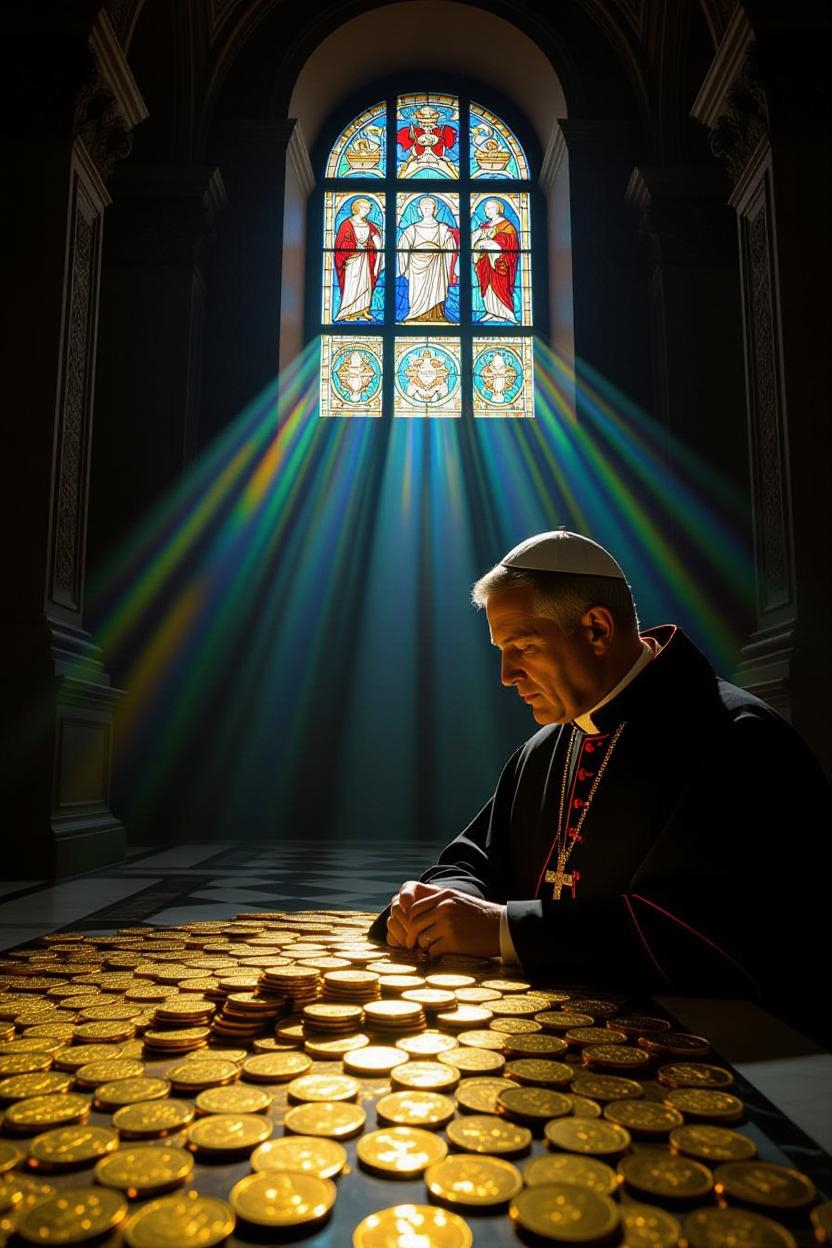
Malachi's "prove me now" has been turned into a bargain. Pay the tenth and God is bound to rebuke the devourer and fill the barn. That is not faith. That is a slot machine with a Bible verse on the glass. The windows in Malachi were covenant mercy on a nation that had withheld the Levites' food. They are not a dividend policy for seed-faith preaching.
Rome did the same thing in a different robe. Canon law made a tenth a church tax, and the machine grew from there: Peter's pence, indulgences, fear sold as devotion. That history is on the money machine page. The modern tithe sermon is the same appetite, with a band and a testimony about a new car.
Grace is not a licence to shut the hand. "Whoso hath this world's good, and seeth his brother have need, and shutteth up his bowels of compassion from him, how dwelleth the love of God in him?" A man who will not give because nobody can invoice him has not understood the gospel either. The amount is not the test. The heart is. Sometimes that will be more than ten percent. Sometimes, in a hard season, it may be less. When it flows from gratitude rather than guilt, it is worship, and God delights in that.
Look at your own heart and ask the Lord what He wants you to release. You are not robbing God by refusing a percentage a preacher invented out of Israel's grain law. You are not earning His favour by hitting ten percent on the nose. You already have the favour, if you have the Son. Give like someone who has been given everything.