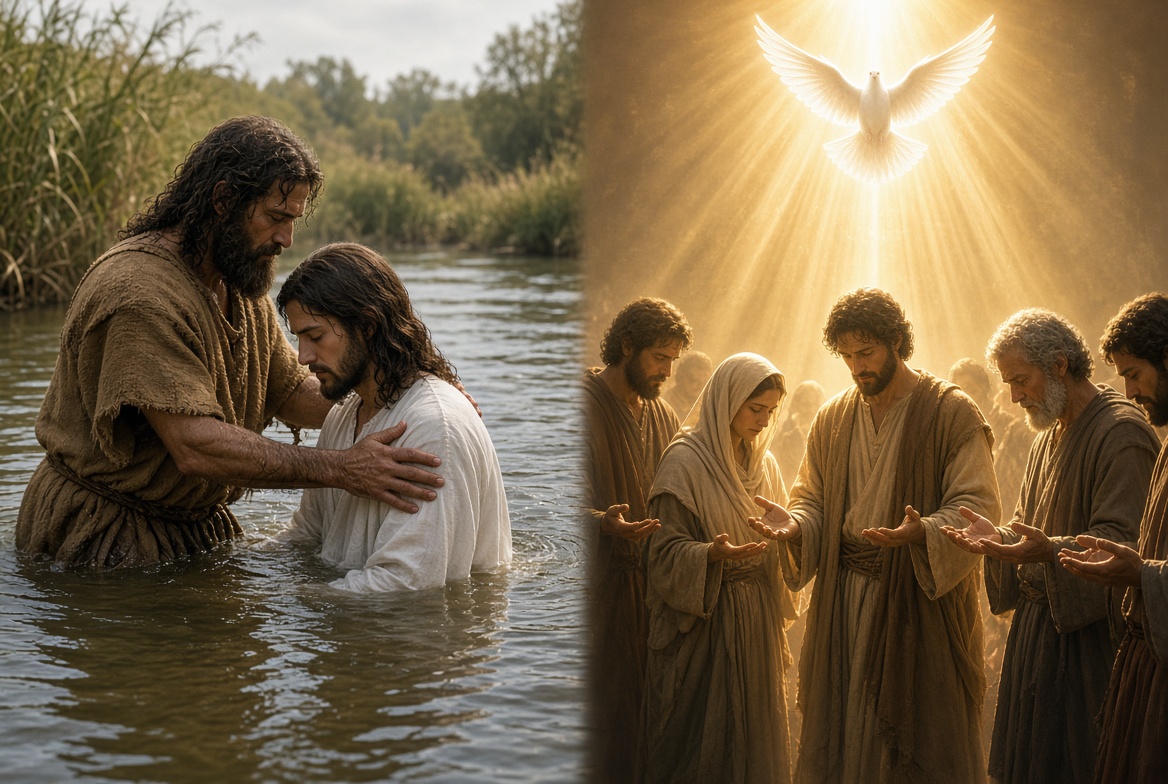
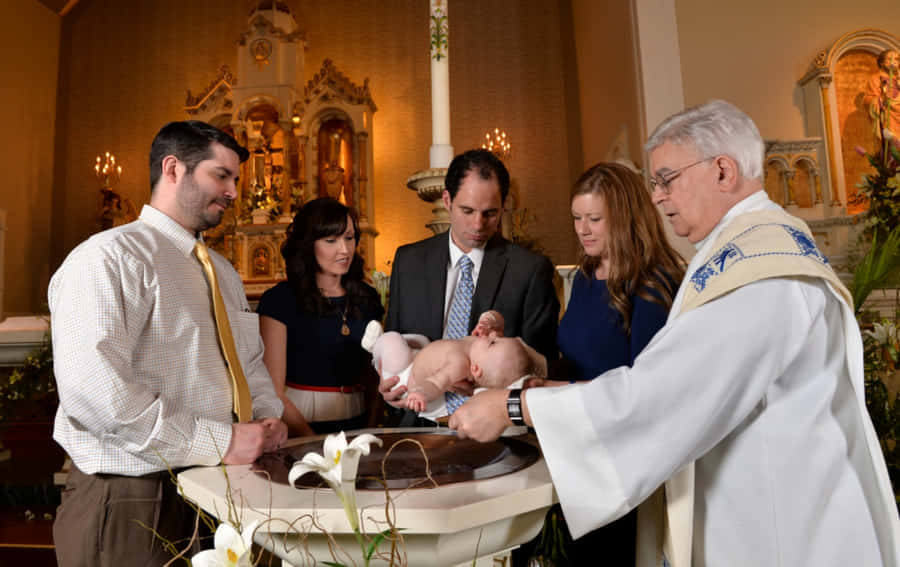

According to the catechism of the Catholic church (CCC 1250), we are all saved from original sin through infant baptism. Also according to the catechism, baptism is a gateway to salvation. Without it, there can be no salvation.
On the other side, baptism as taught in much of Protestantism is an outward expression of an inward decision. It has no bearing on one's salvation. It is a believer's obedience.
There can be only one truth.
Catholic apologists run around Scripture and the catechism making excuses for what they believe. The simple fact is that there is no biblical support for infant baptism, and neither is there biblical support for baptism as a requirement for salvation. What I have seen is Catholic apologists edit their own Bible for the so called original texts, to get around corruption, to promote corruption.
This scripture alone refutes both Catholic doctrines on baptism. Belief is required in order to partake in water baptism. An infant cannot believe with all his heart. A system that makes water the door, before or without that belief, is already answered.
It is further argued that verse 37 is not Scripture. The evidence in favour of including this verse is quite massive.
Erasmus, Stephanus 1550, Beza 1598, Elzevir 1633, Scrivener 1894. Manuscripts E, 4, 36, 88, 97, 103, 104, 242, 257, 307, 322, 323, 385, 429, 453, 464, 467, 629, 630, 913, 945, 1522, 1739, 1765, 1877, 1891, and others. It is in the Byzantine Greek text used by the Orthodox Greek churches, and in the Modern Greek Bible and the Modern Hebrew Bible.
Old Latin manuscripts from the textline that predates any Greek manuscripts we have: ar, c, dem, e, gig, h, l, m, ph, r, t, w. Critical text notes admit it in the Old Latin, the Coptic Middle Egyptian, the Ethiopic, Georgian, and Slavonic. Lamsa's 1933 translation of the Syriac Peshitta and early Armenian versions carry it. So do the Latin Vulgate and the Clementine Vulgate.
Modern versions drop the verse. NIV and ESV jump from the water to the baptism, and the requirement of belief disappears from the page. Catholic editions that follow the same critical Greek do the same. The line that stops infant baptism and baptismal regeneration is the line they remove. The witnesses that kept it are not small. They are the bulk of the tradition that actually copied the verse.

Baptism does not mean water unless it says water. Mark 1, among others, shows that with Jesus' ministry there comes a baptism of the Holy Spirit, after the time of water. Scriptures argued for water baptism, after the ascension, are speaking of the Spirit in most cases.
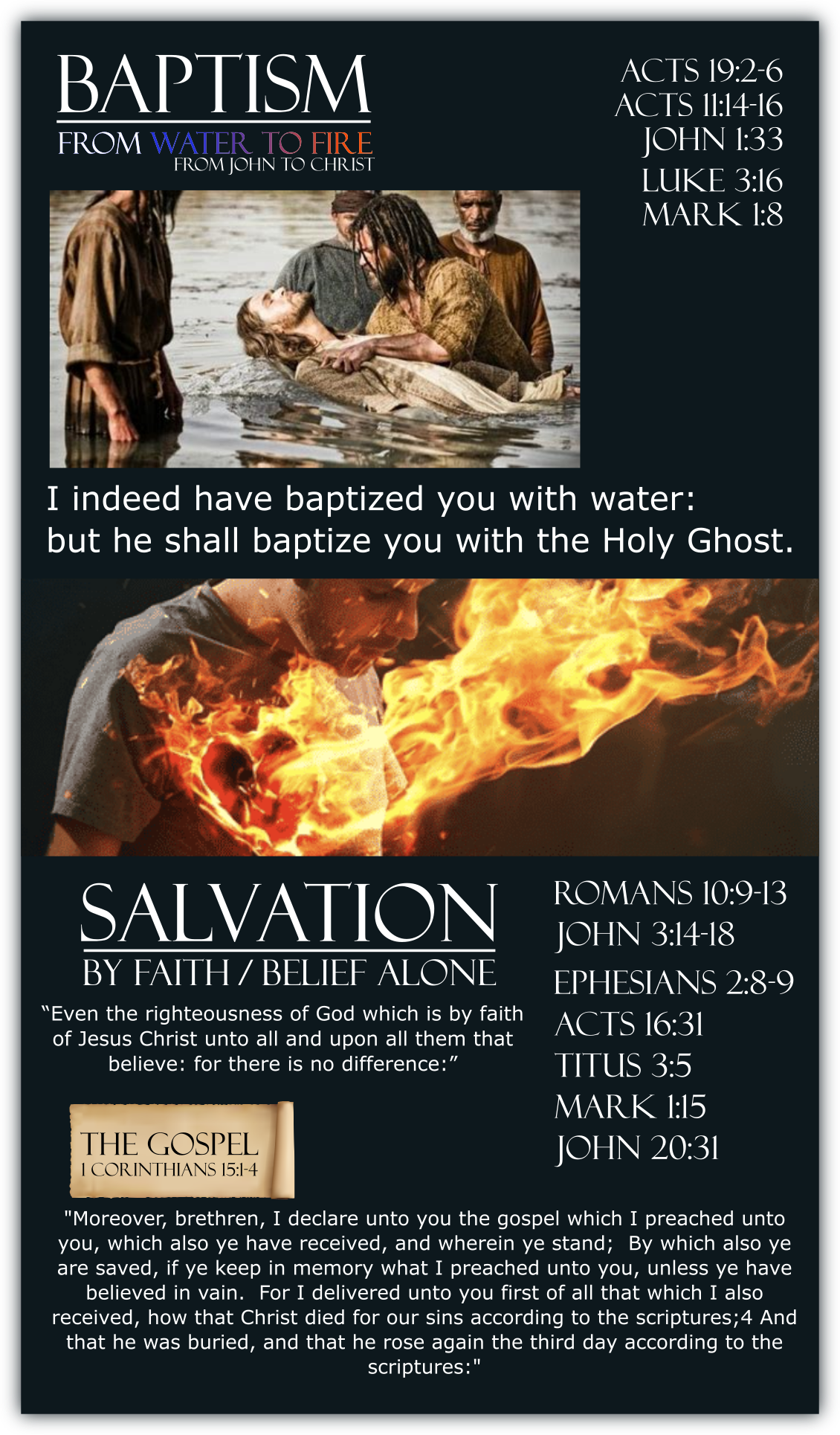
John baptized with water unto repentance. He said another would baptize with the Holy Ghost and with fire. Jesus confirmed it before He left: John truly baptized with water, but ye shall be baptized with the Holy Ghost not many days hence. After that, when the Book says baptized and does not say water, it is talking about the Spirit. When it says water, it is talking about water. That distinction runs through the rest of the New Testament.
Acts 8:36. Acts 10:47. The eunuch and Cornelius. Water is obedience after belief. It is not the new birth.
Romans 6. Galatians 3:27. 1 Corinthians 12:13. Baptized into Christ, into His death, by one Spirit into one body. No water in the Greek. No water in the sense.
Believe. Receive the Spirit. Then, if water is used at all, it follows. It never leads.
This is usually the very first response argument for water baptism.
I'm going to use an analogy. Johnny gave thanks for the gifts he received. Did Johnny give thanks for the gifts he was going to receive, or for the gifts already received?
The little word "for" is the Greek eis. It can look forward, unto a result. It can also look back, because of a result already in hand. Johnny's thanks were because of gifts he already had. Baptism here is the same shape. A man is baptized because of the remission of sins, as the result of having been saved, not in order to earn the remission.
Even if someone insists on pouring water into the verse, the order still answers them. Water is not mentioned. And the baptism is because of remission already given, not the cause of it. The language refutes the doctrine either way.
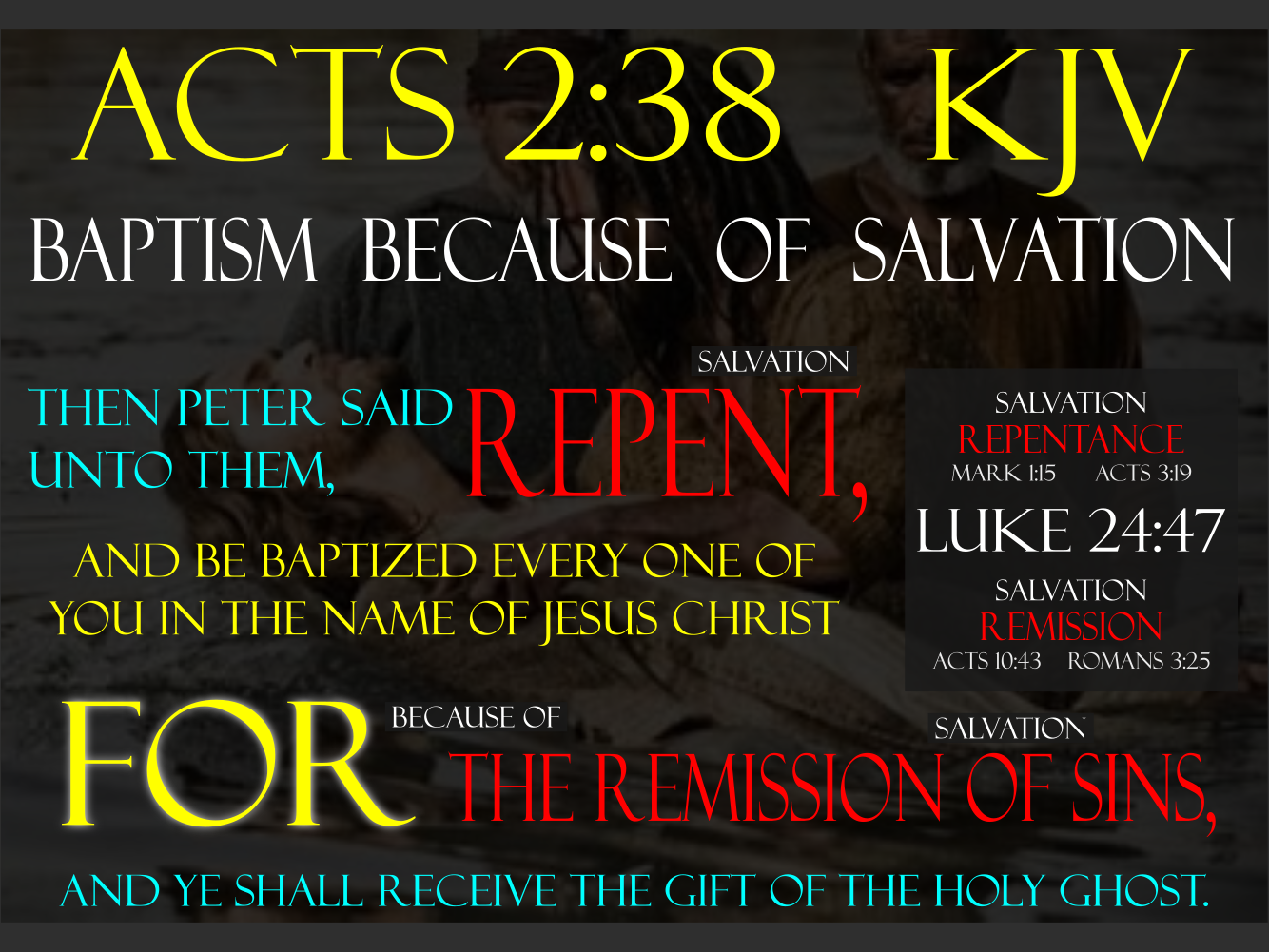
We can establish the order from other scriptures. At the end of Acts 10, both Jew and Gentile who believed received the Holy Spirit, and were only water baptized later. They asked to be water baptized. It was not even brought up until after the Spirit had already come. Verse 43 says that through His name whosoever believeth in Him shall receive remission of sins. The uncircumcised received that remission when they believed. Water came after.
So Acts 10 supports water baptism being allowed for those who have already received remission of sin. One cannot use the Old Testament circumcision practice to create an infant connection to water baptism. Cornelius and his house were not infants, and they were not saved by the water.
These are the lines usually brought up. None of them make water the door.
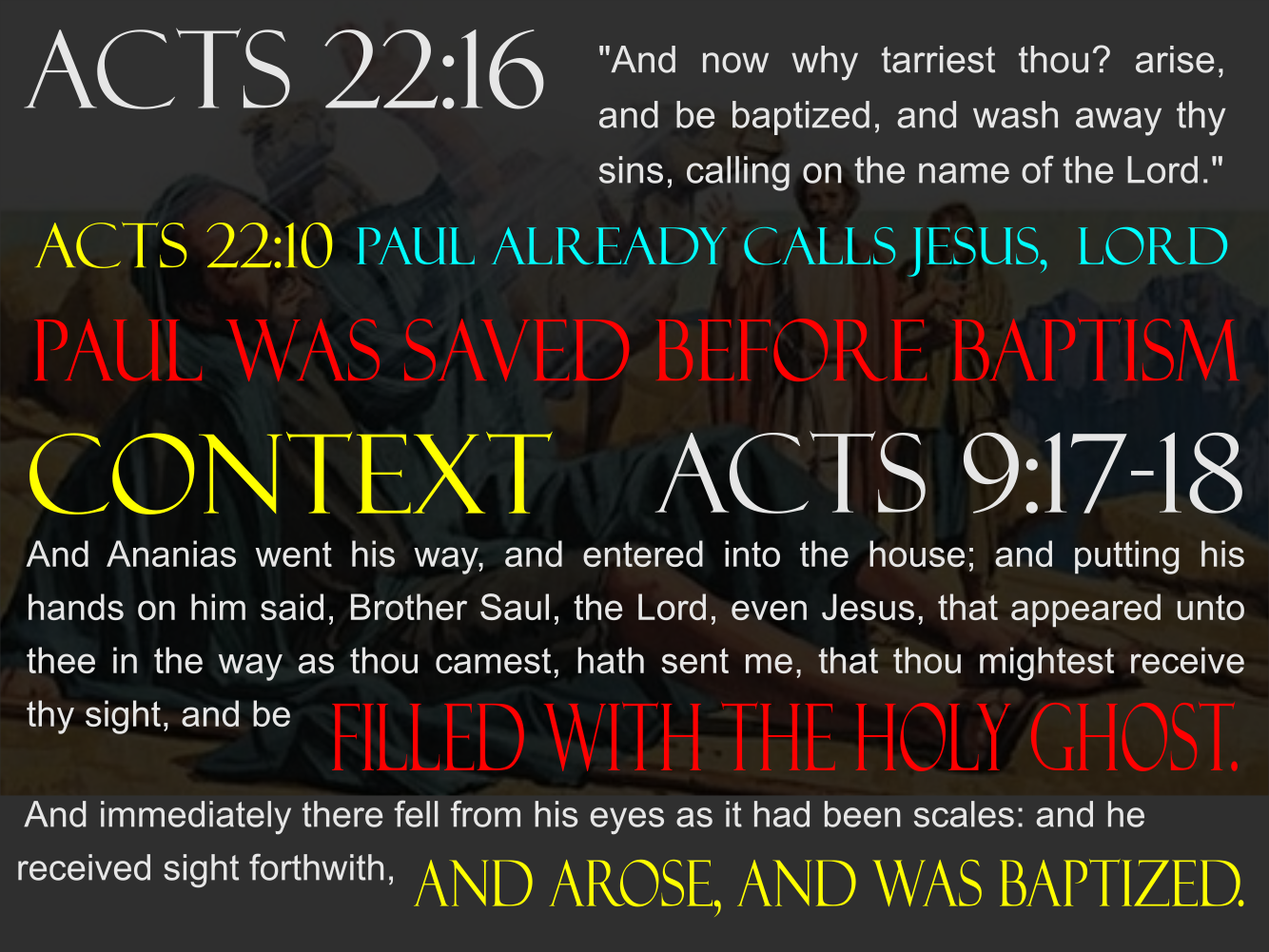
The washing is tied to calling on the name of the Lord, not to the water. Romans 10:13 already said that whosoever shall call upon the name of the Lord shall be saved. The Greek does not insert water. The sense is the same as the rest of the Book: call, and be washed. Water is not in the verse.
"Except a man be born of water and of the Spirit, he cannot enter into the kingdom of God." The next verse explains the water: "that which is born of the flesh is flesh; and that which is born of the Spirit is spirit." Water is the natural birth. Spirit is the new birth. Nicodemus was being told he needed more than being born a Jew. He needed to be born from above. Making "water" mean a church font turns the explanation Jesus just gave into nonsense.
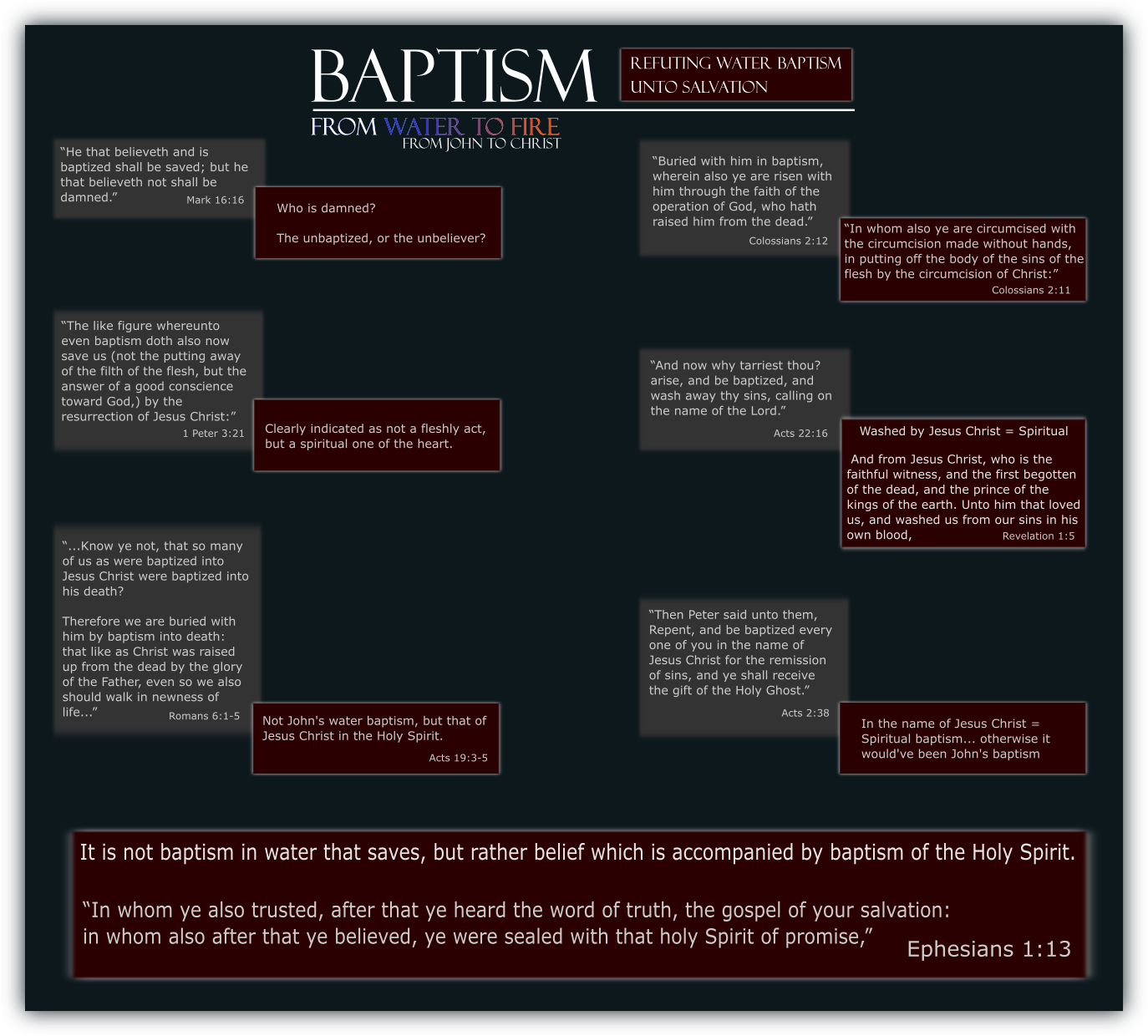
"He that believeth and is baptized shall be saved; but he that believeth not shall be damned." The damning clause is unbelief, not the absence of water. The baptism here, after the resurrection command, is the Spirit baptism Jesus had just promised. Belief is the condition. The one who does not believe is the one who is damned. An unbaptized believer is not the subject of the second half.
"The like figure whereunto even baptism doth also now save us (not the putting away of the filth of the flesh, but the answer of a good conscience toward God,) by the resurrection of Jesus Christ." Peter removes the water argument in the parenthesis. It is not the putting away of the filth of the flesh. It is the answer of a good conscience, by the resurrection. The figure saves the way the ark saved: by being in Christ, not by getting wet.
Buried with Him by baptism into death. Baptized into Christ. No water is named. The baptism that puts a man into Christ is the one Spirit baptism of 1 Corinthians 12:13: "by one Spirit are we all baptized into one body." That is the new birth. Water cannot do it, and the verses do not ask it to.
Later writers built a system where the font saves. That was not the only voice, and it was not the earliest.
Around the year 200 he wrote that the delay of baptism is preferable, principally in the case of little children. Why, he asked, hasten the innocent age to the remission of sins? He would not put a baby through a rite the baby could not answer. That single refusal answers the catechism claim that infant baptism is the ancient and necessary door.
The man on the next cross believed. Jesus said, today shalt thou be with me in paradise. No water. No font. No priest. Later writers who wanted water to be necessary had to invent a baptism of desire or a baptism of blood to cover him. The words did not. Belief was enough.
He records the objection he was answering: baptism is not necessary for those to whom faith is sufficient, for Abraham pleased God by a sacrament of no water, but of faith. He disagreed. The objection itself shows that in his day the faith-alone reading of the gospel was already being made, from the Book.
Even Augustine, who pressed infant baptism hard, admitted that the thief shows the place of baptism can be supplied by faith and conversion of heart when water cannot be had. The exception gives the game away. If faith can supply for water, water was never the thing that saved.
The churches that made the font the door were building past the text. The text, and the witnesses who stayed with it, keep belief first and the Spirit as the baptism that matters.
The eunuch had to believe with all his heart before Philip would put him in the water. Cornelius received the Spirit before anyone mentioned water. The thief went to paradise without either. Christ died for our sins according to the scriptures, was buried, and rose again the third day according to the scriptures. Believe that. The Spirit baptizes you into Him. Water can follow. It cannot lead.