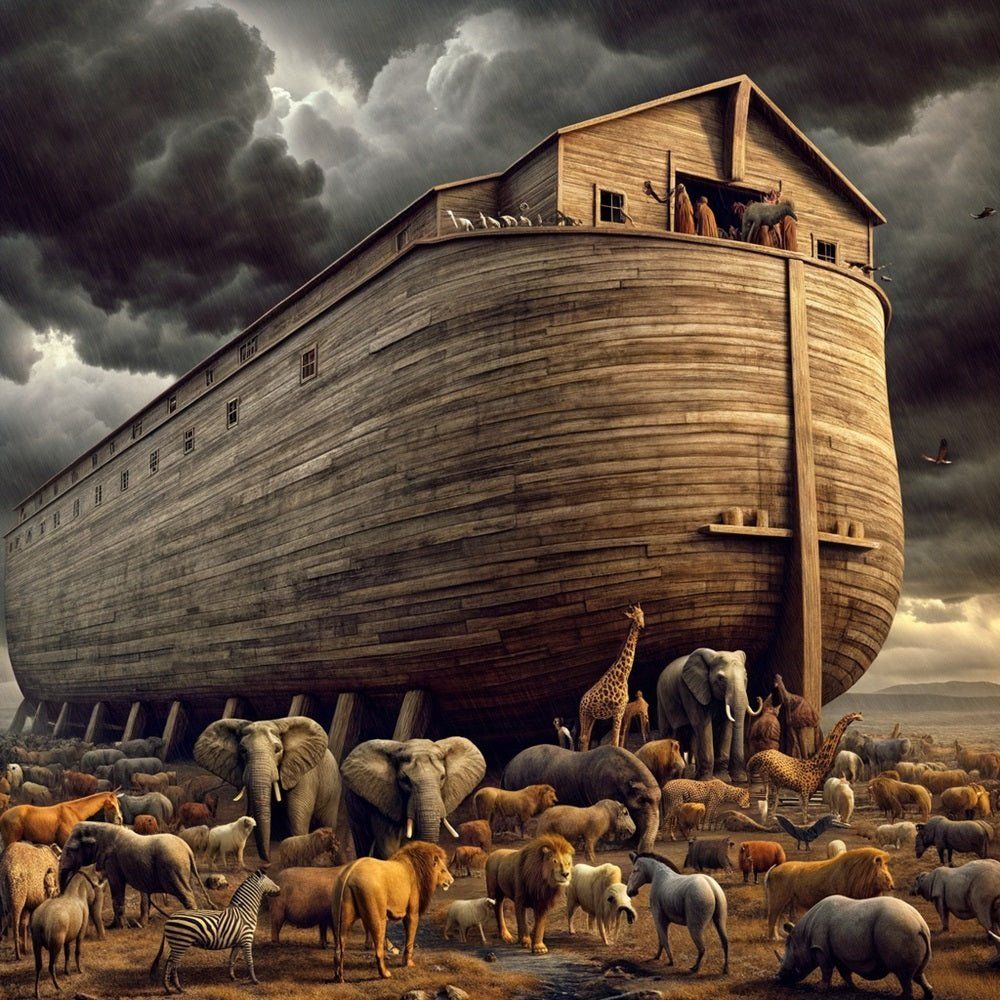
One has to look at the details presented by those who oppose, and those who support the evidence for a global flood event, and decide for themselves, which evidence stacks up.
I've met many who, regardless of the provided evidence, simply will not accept that which proves God's Words to be true.
I've attached the external links to the sources as well, but this summary article should provide fair reasoning to consider.
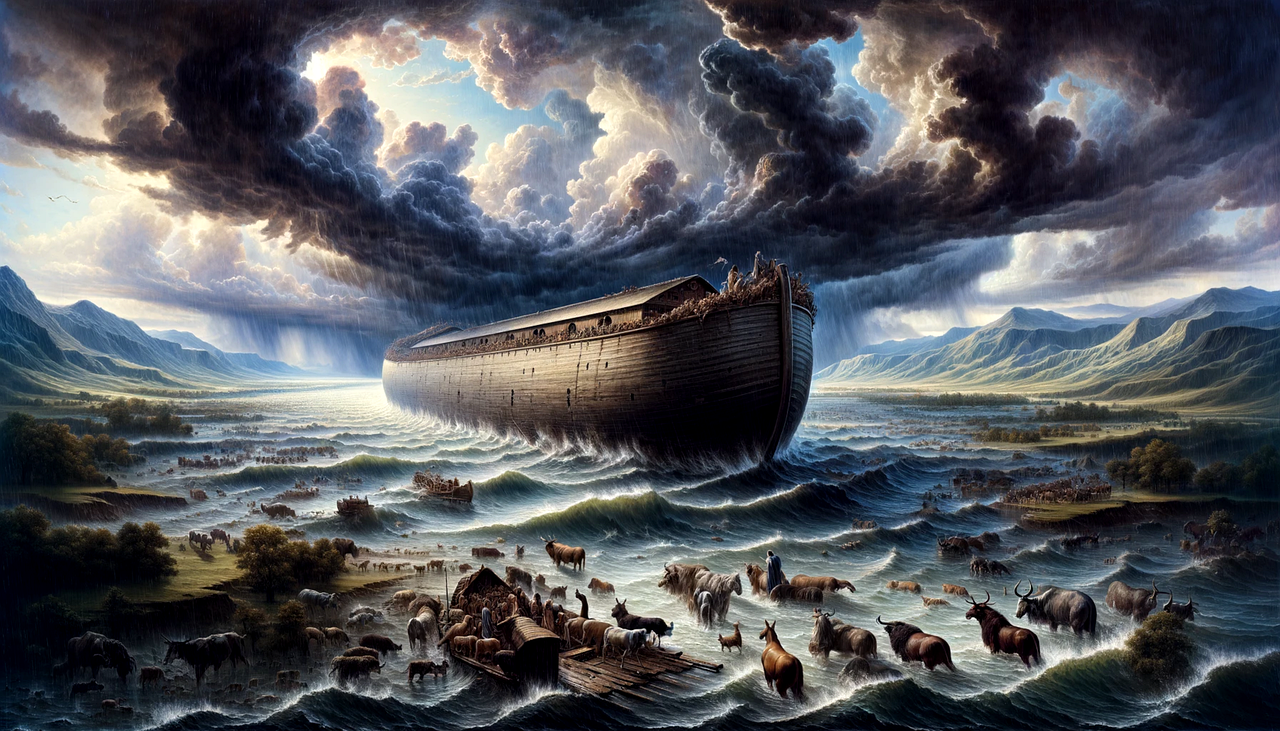
This illustration captures the global scale described in God’s Word, where the waters rose above every mountain by more than twenty feet. It directly refutes critics who call the account exaggerated or local, because only a worldwide catastrophe would require an Ark of this size to preserve every land animal kind and would match God’s promise of no future flood like it.
God’s Word in Genesis gives a clear account of a worldwide flood that covered every mountain and destroyed all life outside the Ark. Many people today question whether this really happened, suggesting it was just a local event or a made-up story. Yet when we look at the evidence step by step, the picture that emerges is one of a global catastrophe exactly as described. Below we walk through the main lines of support, addressing the common objections as we go.
Genesis tells us the floodwaters rose until even the highest mountains were covered by more than twenty feet. Every living thing on land perished except those on the Ark. After the waters receded, God promised never to send another flood like it. These details are not vague or poetic; they describe a unique, earth-shaping event.
Critics sometimes claim the language is exaggerated or that the flood affected only the known world of Noah’s day. But God’s Word uses the same Hebrew terms for “all the high mountains under the whole heaven” that it uses elsewhere for the entire earth. A local flood would not require an Ark big enough for every kind of land animal, nor would it explain God’s promise, since local floods have happened many times since.1
Furthermore, the dimensions given in God’s Word—300 cubits long, 50 wide, 30 high—have been shown by modern engineering studies to be stable in rough seas and large enough to hold representatives of every land animal kind, with room for food and ventilation. This matches the requirement to repopulate the earth from eight people and the animal kinds on board. The rainbow covenant afterward is a universal sign, not limited to one region, further proving the flood’s global nature.2
More than five hundred different people groups scattered across every continent tell stories of a great flood that wiped out almost everyone. Many of these accounts describe a family saved in a boat, birds sent out to check for dry land, and a rainbow afterward. The details line up remarkably with the Genesis record.
Some suggest these legends are just independent inventions or copies of older myths like the Epic of Gilgamesh. Yet the stories appear among isolated tribes who had no contact with ancient Mesopotamia. The best explanation is that all these groups descend from Noah’s three sons, carrying the true memory and adding cultural flavor over time. A local flood in one region could never produce identical traditions on opposite sides of the globe.3
Even in distant places like China, ancient records speak of a family of eight survivors and a flood that covered the land. Native American tribes, Australian Aboriginal groups, and Pacific Islanders all preserve the same core elements. The minor variations are exactly what we would expect as the story was passed down through generations after the dispersion at Babel. This worldwide witness stands as powerful confirmation that the Genesis account is the original, accurate history.
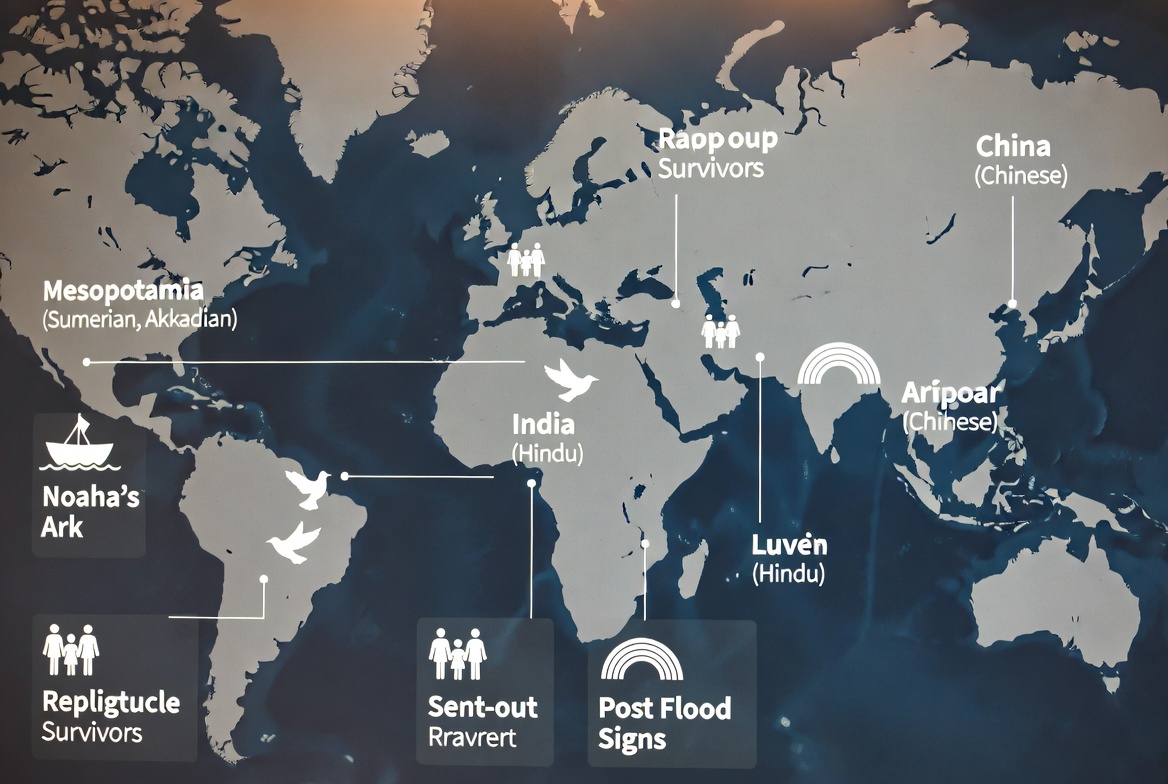
This map shows the global distribution of flood stories matching the details in God’s Word. It refutes the critics’ claim that these are independent myths or borrowed tales, because isolated cultures with no historical contact share the exact same key elements—proving a common origin from Noah’s family after the flood.
Seventy percent of the earth’s land surface is covered by thick layers of sedimentary rock containing billions of fossils. These layers are often flat, with little erosion between them, and stretch across entire continents. Such features point to water moving at enormous scale and speed.
Critics who hold to slow, gradual processes over vast ages struggle to explain why we do not see millions of years of weathering or burrowing between layers. In many places the layers bend without cracking, which only happens while the sediment is still soft. A global flood with powerful currents and tsunamis easily accounts for the rapid burial and the lack of disturbance seen in the record.4
Additional evidence includes polystrate fossils—trees and animals standing upright through multiple layers that secular scientists claim represent millions of years. These could only form if the layers were laid down quickly before the tree could rot. The lack of soil horizons or root systems between layers further shows continuous rapid deposition during the flood year, not slow accumulation.
Sea creatures are found fossilized on the peaks of the Himalayas, the Alps, and even Mount Everest. Shells and fish appear thousands of feet above today’s sea level.
Some argue the mountains slowly rose from the ocean floor over long periods. Yet the fossils are often jumbled together with land plants and animals, and the rock layers show signs of fast deposition rather than slow uplift. During the flood, waters rose high enough to cover every mountain. Later, as the continents shifted and rose rapidly at the end of the flood year, these marine deposits were lifted into place.5
This matches the catastrophic plate tectonics model developed by creation scientists, where runaway subduction during the flood caused rapid mountain building. Critics’ slow-uplift idea fails because delicate fossils would have eroded away over supposed millions of years, yet many are exquisitely preserved.
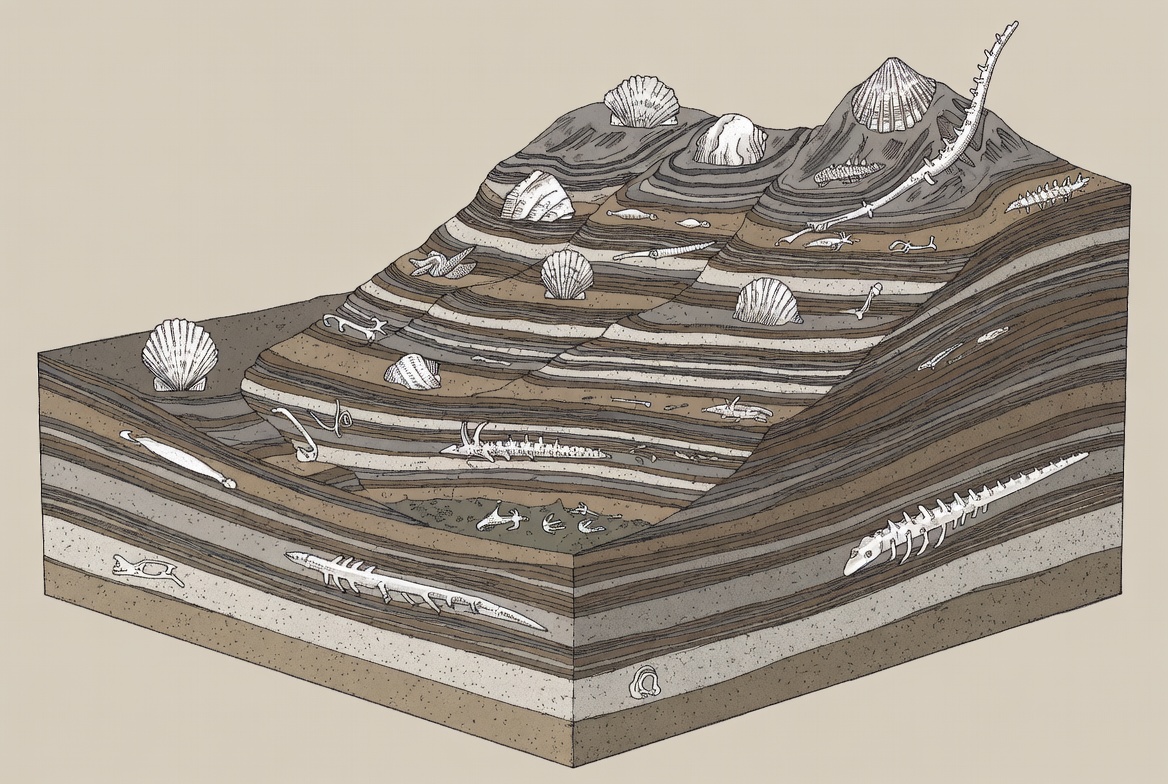
This cross-section illustrates how the flood laid down massive sedimentary layers quickly, burying marine life on what became high mountains and preserving delicate fossils. It directly refutes both the local-flood claim (which couldn’t produce continent-wide layers) and the millions-of-years model (which cannot explain the flat contacts and lack of weathering).
Around the world we find huge bone beds where millions of creatures were buried together. Fish are packed so tightly they look like they were dumped by a giant net. Dinosaurs appear in “death poses” with necks and tails arched backward, a sign they drowned while struggling in water. Swim tracks show animals trying to escape rising floodwaters, and these tracks appear on multiple continents in the same rock layers.
Critics sometimes say these are just the result of local river floods or gradual deaths over time. But the scale, the mixing of land and sea creatures, and the exquisite preservation of soft tissue and even skin impressions do not fit slow processes. Rapid burial under tons of sediment during a global flood explains everything perfectly, including why so many creatures were caught fleeing in the same direction.6
Famous examples include the Dinosaur National Monument, the Morrison Formation, and the “dinosaur stampede” in Australia where hundreds of tracks show panic in one direction—consistent with rising floodwaters. Soft tissue in dinosaur bones (still debated by secular scientists but repeatedly confirmed) also fits burial only thousands of years ago, not millions.
The Grand Canyon stretches for hundreds of miles with flat-lying layers that were clearly cut through while still soft. Enormous amounts of sediment were moved quickly. Similar features exist on every continent.
Secular explanations rely on a small river carving the canyon over millions of years, yet the volume of material removed and the lack of a huge delta downstream do not match. The receding waters of the global flood, draining off the continents in powerful channels, carved these features in a matter of weeks or months, not ages.7
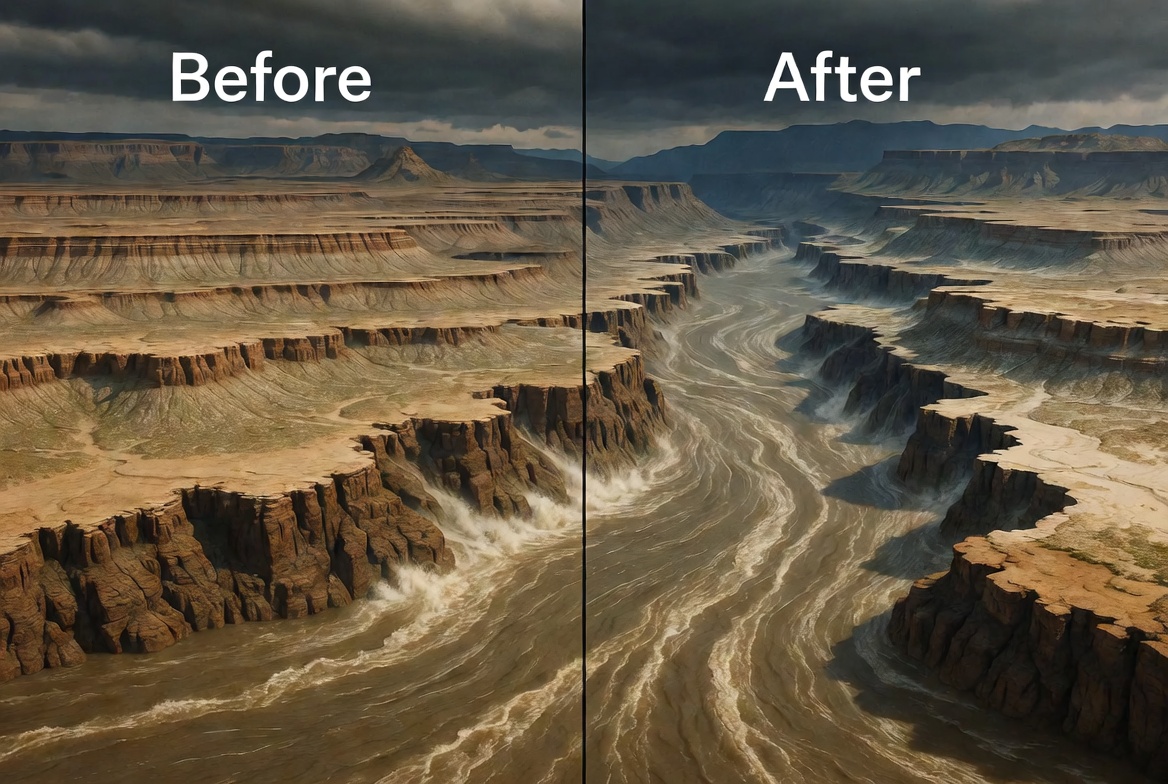
Note: I have no clue what AI was thinking... or not thinking with this image:
This illustration shows how the receding waters of the flood carved the Grand Canyon and similar features worldwide in weeks or months. It refutes the slow-river-over-millions-of-years idea, because the missing downstream delta and the soft-sediment cutting match catastrophic drainage, not gradual erosion.
Trees and animals found standing upright through multiple rock layers that are said to represent vast ages prove the layers formed quickly. These polystrate fossils could not have remained exposed for millions of years without rotting or eroding. The flood’s rapid sedimentation buried them before decay could occur.8
Critics call them rare exceptions, but hundreds of examples exist worldwide, including in coal seams and limestone. This pattern fits the Genesis Flood perfectly and destroys the idea of slow, uniform deposition.
God’s Word describes the “fountains of the great deep” breaking up on the same day the rain began. This points to massive tectonic activity. Creation scientists have modeled runaway subduction where cold ocean plates sank rapidly, causing continents to move thousands of miles in months, raising mountains and generating the volcanic and earthquake activity recorded in the flood.9
This explains the jumbled fossils, the heat that warmed the oceans for the post-flood Ice Age, and the magnetic reversals in the rock record—all in one year, not millions. Slow plate tectonics cannot account for the speed or the scale of the geologic changes we see.
After the flood, the warm oceans (heated by volcanic activity and rapid tectonics) caused massive evaporation. Moisture moved to the poles and fell as snow, producing a single, rapid Ice Age. This explains frozen mammoths in Siberia and Alaska with buttercups in their mouths—tropical plants preserved instantly by sudden cold.10
Critics claim ice ages took tens of thousands of years, but the creation model fits the evidence of quick onset and the limited number of ice-age layers. The Ice Age ended as oceans cooled, exactly as expected after the flood reset the climate.
Human population growth curves match a start from eight people after the flood roughly 4,500 years ago. The genetic bottleneck in many animal kinds also fits a recent reset. Post-flood conditions set the stage for a single Ice Age as the oceans cooled and moisture moved to the poles. None of these patterns work with a local flood or long ages.
Further confirmation comes from the fossil record showing ecological zones buried in sequence as waters rose, from sea creatures at the bottom to land animals higher up. Radiometric dating methods that give old ages rely on assumptions that ignore the flood’s massive changes to carbon and other elements. When those assumptions are corrected, the dates line up with the biblical timeline.
In summary, God’s Word describes a global flood, and the earth itself still bears the scars. Fossil layers, mountain-top sea creatures, worldwide legends, and rapid geologic features all line up. The usual objections, whether they claim the flood was local, mythical, or impossible under slow processes, do not hold up when the evidence is examined carefully. The Great Flood of Noah stands as both a judgment and a reminder of God’s power and mercy.
TBA

Some say millions of years, some say Thousands.
Let's take a look at what the observable evidence shows us...
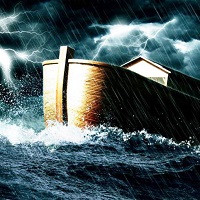
We all know the story of Noah and his family. Nearly every belief system has a flood story...

Bunnies and chocolate eggs... yes we all know that time of the year. Should we be concerned about it as believers?